
Long-lasting casual wear for everyday life, chosen with care
Yes, casual clothes can make everyday dressing comfortable and easy when you choose for fit, fabric, and repeat wear rather than a passing trend. Choosing long-lasting casual wear for everyday life means looking beyond first impressions to pieces that feel good, work with your wardrobe, and suit the rhythm of your days.
A quick purchase can be appealing: a familiar shape, a pleasing color, a moment of certainty. But the clothes you return to are often the ones chosen with more care. Their value shows in how they feel after hours of wear and how naturally they work with what you already own.
This guide will help you assess fabric quality, spot construction details that matter, and pause before an impulse buy. You’ll also find ways to build a versatile rotation of casual staples, from easy layers to dependable everyday tops. The goal isn’t a fuller closet, but a more considered one shaped around comfort, usefulness, and the quiet pleasure of wearing something often.
Key Takeaways
- Choose everyday clothes that fit comfortably, allow easy movement, and suit the conditions you’ll wear them in.
- Pause before buying: consider whether a piece works with your existing wardrobe and answers a real need.
- Assess fabric by its fiber content, care instructions, feel, drape, and how it responds to creasing.
- Build a flexible rotation of easy-to-style staples, then use layers and small outfit changes to adapt them to different plans.
1. Are Casual Clothes the Ultimate Choice for Everyday Comfort and Effortless Style?
Casual clothes can carry you through full days when comfort and appearance work together. For commuting, desk work, and errands, choose breathable fabric, light layers, and a fit that lets you reach, sit, and walk without restriction. A close-fitting shirt may feel warm, while an overly loose one can bunch beneath a jacket. Choose what suits the day’s actual movement.
Fit shapes both comfort and polish. Check that shoulder seams sit near the edge of your shoulders, sleeves allow arm movement, and a seated waistband doesn’t pinch. A little stretch can make a shirt or pair of trousers easier to move in while keeping a neat outline. Clean, cared-for casual pieces can look considered without feeling formal. For example, pair a comfortable crewneck with well-fitting trousers and simple shoes for an easy, composed outfit.
There’s no single typical cost for durable everyday clothing. Price varies by garment, fabric, construction, and care needs, so weigh those details against how often you expect to wear a piece. No one clothing brand suits every wardrobe in the United States. Look for clear information about fiber content, care, and construction, then judge each item on its own merits.
Sustainable or ethical clothing can be durable, but those qualities alone don’t guarantee long wear. Consider them separately: look for information about how a garment is made, then examine its fabric, seams, and care instructions. A responsibly produced cotton tee, for instance, still needs sturdy seams and fabric suited to frequent washing. For long-lasting casual wear for everyday life, choose pieces that meet your comfort needs and stand up to the routines you’ll actually put them through.
2. Avoiding careless outfits and impulse buys
An appealing shirt can still go unworn if it doesn’t meet a real wardrobe need. Before buying, name the situation it suits, such as a casual workday or weekend errands. Then picture it with clothes you already own. If it needs several new pieces to make an outfit, it may be less useful than it first seemed. A brief pause helps separate a genuine need from the mood of the moment.
Try a simple outfit test: build three combinations with the item and clothes you own. A neutral shirt might work with jeans, tailored trousers, and a skirt; a highly specific graphic top may have fewer pairings. Consider all-day comfort, too. Ask whether the garment suits your usual activities, feels right against your skin, and is easy for you to care for. These questions make the decision practical, not merely emotional.
If you’re shopping on a budget, favor versatile pieces, inspect construction, and buy only what fills a clear gap. Look closely at seams, hems, closures, and fabric feel to judge whether a garment seems suited to repeated wear. Compare its care instructions with your routine. A shirt that needs special handling may take more time than one that fits your usual laundry habits. Cost per wear is a useful way to think: a frequently worn piece may serve you better than a cheaper item that stays in the closet.
Careless outfits often start with choosing each item separately. Instead, plan around one anchor piece, such as dark jeans, then add a shirt and layer suited to the same setting. Before checkout, check the fit, imagine a complete outfit, and ask what the new piece replaces or complements. If the answer isn’t clear, leave it for another day. A deliberate choice can make getting dressed easier and keep your wardrobe connected to your actual life.
3. How to assess fabrics in stores and online
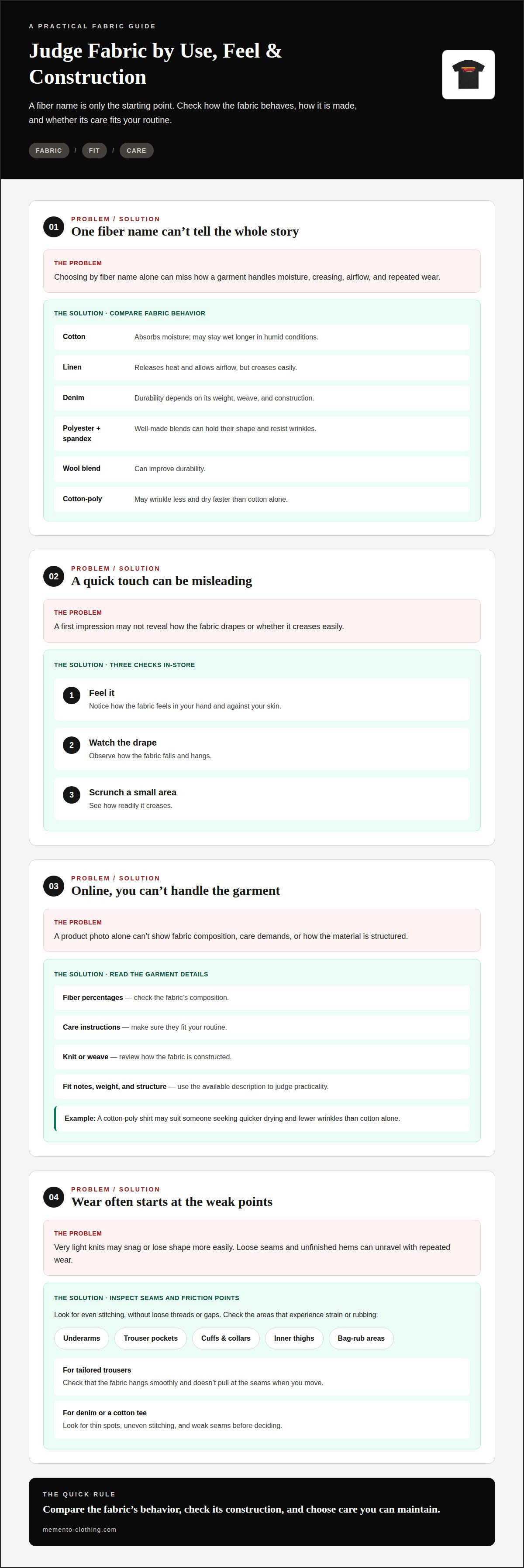
Compare fabrics by how they’re made and used, not by fiber name alone. Cotton absorbs moisture and may stay wet longer in humid conditions; linen releases heat and allows airflow, but creases easily. Denim’s durability depends on its weight, weave, and construction. Well-made polyester and spandex blends can hold their shape and resist wrinkles, while a wool blend can improve durability. A cotton-poly blend may wrinkle less and dry faster than cotton alone.
In a store, use three simple checks: feel the fabric, observe how it drapes, and scrunch a small area to see how it creases. Then inspect seams, hems, and stress points, such as a shirt’s underarm or a trouser pocket. Stitching should look even, without loose threads or gaps. For tailored trousers, check that the fabric hangs smoothly and doesn’t pull at the seams when you move.
When shopping online, read fiber percentages alongside care instructions. Check the knit or weave, fit notes, and any description of fabric weight or structure. A cotton-poly shirt, for example, may suit someone seeking quicker drying and fewer wrinkles than cotton alone. Care guidance matters, too: a garment that needs handling you can’t maintain may be less practical for regular wear.
Some fabrics and construction choices show wear sooner during demanding routines. A very light knit may snag or lose shape more easily than a sturdier construction; loose seams and unfinished hems can also unravel with repeated wear. Inspect areas exposed to friction, including cuffs, collars, inner thighs, and spots where a bag rubs. For denim or a cotton tee, check for thin spots, uneven stitching, and weak seams before deciding.
4. Wardrobe staples and versatile casual styling
Build a wardrobe around pieces that work in more than one setting. A white shirt can go with jeans for errands, then tailored trousers for an informal meeting. A midi dress can suit daytime plans or a more formal occasion with a change of shoes and outerwear. Choose staples that fit your routines instead of filling your closet with pieces designed for a one-off event.
Let the season guide your fabric and layers. Cotton and linen are lightweight choices for warm days; a linen blouse can pair with jeans or a skirt. In colder weather, add a sweater, jacket, or scarf over familiar basics. A cardigan can soften a collared shirt, while a denim layer gives a casual dress a more relaxed feel. Each layer helps an outfit adapt as the day changes.
Choose one focal point and keep the rest of the outfit balanced. A textured top, satin skirt, or wide-leg jeans can carry the look without competing with several statement pieces. For example, style wide-leg jeans with a simple top and comfortable sneakers for daytime, then switch to flats and a structured jacket for a casual meeting. Small adjustments can change the impression without replacing the whole outfit.
Accessories help staples work across different plans. Practical bags, minimal jewelry, and comfortable footwear can add polish without making everyday dressing feel formal. Longer shorts suit warm summer days and can pair with a collared shirt for a more considered finish. For an informal workplace, tailored trousers and a blouse are another option. Choose combinations you can repeat, then adapt them with shoes, accessories, or outerwear.
Memento Mori Clothing: Marysville Monarchs Spirit Wear
Memento Mori Clothing offers Marysville Monarchs Spirit Wear for individuals who want everyday clothing to reflect a spirit of dedication and community pride. For casual staples with a distinct point of view, its Memento Mori Heavyweight Hoodie, Memento Mori Vintage Tee, and Memento Crewnecks connect daily dressing with a philosophy centered on remembering what matters. Memento Hats offer another simple way to carry that identity into an ordinary day.
Choose a piece based on how you expect to wear it: a tee for relaxed outfits, a hoodie or crewneck as an added layer, or a hat as a finishing detail. Consider fit and care instructions alongside your routine, as you would with any garment. Explore Memento Mori Clothing’s collection to find a piece that feels at home in your wardrobe.
Let Your Everyday Choices Reflect What Matters
A wardrobe takes shape through the pieces you choose to keep returning to. Let the next addition carry a meaning beyond the moment: a familiar symbol, a shared community, or a philosophy that stays with you as days change. That intention can make getting dressed feel less like a search for something new and more like a quiet expression of who you are.
For a considered addition to your casual rotation, explore the Memento Mori Heavyweight Hoodie, Memento Mori Vintage Tee, and Memento Crewnecks from Memento Mori Clothing. Each brings the brand’s reflective spirit into everyday dressing. Choose the piece that feels most like your own, rather than one that simply follows a passing mood.
Explore that next step when it feels right: contact Memento Mori Clothing. A more intentional approach to long-lasting casual wear for everyday life begins with choices that feel personal. Let what you wear carry a little more of what you value.
Frequently Asked Questions
Are Casual Clothes the Ultimate Choice for Everyday Comfort and Effortless Style?
Casual clothes work well for ordinary days when movement and ease matter, but they don’t suit every setting. A relaxed outfit can feel comfortable for commuting, errands, or meeting friends; a formal event or workplace dress code may call for something more polished. Let the day’s activities guide your choice, and use shoes or a jacket to adjust the formality.
What is the best fabric for all-day wear?
There isn’t one best fabric for every day, because climate, activity, and personal comfort differ. For a long day indoors, consider a breathable knit that feels pleasant against your skin and doesn’t restrict movement while seated. If you’ll move between warm outdoor air and cool indoor spaces, a light layer over a comfortable base gives you more flexibility than one heavy garment.
What fabrics are most durable and comfortable for everyday casual wear?
Durability and comfort depend on construction as well as fiber. Sturdy denim may suit frequent wear, while a soft knit may feel better on relaxed days. Match the material to its purpose: choose work-friendly trousers for repeated movement or a smooth, easy-care top for travel. Check the care label, since suitable laundering helps preserve a garment’s appearance.
What are the most versatile casual wardrobe essentials for daily wear?
Useful essentials are the pieces that work across your real schedule. A plain top, comfortable jeans, a layer for changing temperatures, and walking-friendly shoes can cover errands, casual plans, and relaxed work settings. Choose colors that coordinate, so one top pairs with several bottoms. A practical bag can complete the outfit without adding another clothing purchase.
Which clothing brands offer long-lasting casual wear in the United States?
No one brand is right for every wardrobe in the United States. Look for clear information about fiber content, garment care, and construction, then assess each piece on its own merits.